Author: Jon Siemko

  • Dief The Chief


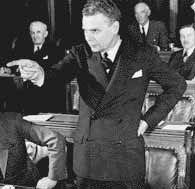
    One of the more insightful tributes to our 13th prime minister John Diefenbaker  the first master of mass communication in Canadian politics.

    source Montréal Gazette

    While the 1960 Bill of Rights did not have the entrenched constitutional character of the 1982 Charter of Rights, many key provisions of the Charter were first articulated in the Bill of Rights.More than a decade before official bilingualism, Diefenbaker made government cheques bilingual, and introduced simultaneous translation to the House of Commons.The themes of diversity and empowerment were found in the appointment of the first woman, Ellen Fairclough, to Cabinet. He gave aboriginal Canadians the right to vote without losing their treaty status. When Mulroney campaigned against apartheid in South Africa in the 1980s, using the Commonwealth as his platform, he was taking a page from Dief, a quarter century earlier.Diefenbaker’s appointment of the Hall Commission, led by Saskatchewan Judge Emmett Hall, was a landmark that led directly to medicare.The Glassco Commission reshaped the organization and administration of the federal government. The Bladen Commission led to the Auto Pact.A decade before Pierre Trudeau’s recognition of Red China, Diefenbaker opened the door with wheat sales.And then there was his northern vision, with its Roads to Resources program. Half a century later, Harper has made Arctic sovereignty, sustainable development, and the autonomy of northern peoples a centrepiece of his policy agenda.


  • Conservative Students Vs. Liberal Students

    It’s true Conservative students have  their political mettle tested through a baptism of metaphorical fire. Oh the stories I could tell about the University of Guelph.

    Source Jonah Goldberg


    Conservative motives run the gamut, from the strategic to the sentimental to the financial. Strategically, the university is the citadel from which progressives hold the commanding heights of the culture (to borrow a phrase from Lenin). Sentimentally, many conservatives secretly want to be academics, toiling away in the stacks with ancient books and even more ancient arguments. They feel cast out of Eden, as it were, and they want to go back. On the financial front, the higher education racket is simply a multi-billion dollar gravy train.


    These motives often combine to create a conservative portrait of higher education that is bleak and apocalyptic. And while the P.C. horror stories are often accurate and the concerns often sincere, the picture painted by my fellow conservatives isn’t always complete.


    There’s a powerful upside to the downside of higher education: conservative students tend to come out of universities sharper, more self-confident and more ready to rumble in ideological debates because as members of a disfavored minority, conservative students have their preconceived notions tested every day.


    Obviously, there’s no shortage of sharp liberal students on college campuses, but even the sharpest ones get a lot more of their education passively, because they largely agree with what their professors and textbooks say. Their prejudices and convictions are more likely confirmed, not tested. They can go with the flow never questioning the received wisdom because the received wisdom is what they brought to the classroom in the first place.


    Indeed, a new study, “Conservative Critics and Conservative College Students: Variations in Discourses of Exclusion” by sociologists Amy Binder and Kate Wood at the University of California San Diego, confirms that many conservative students at an (unnamed) elite Eastern university, felt as if they benefited from the need to sharpen their arguments and know their facts more than liberal students.
    read more here


  • Tim Hudak On Cost Of Living In Premier Dad Dalton’s Ontario

    An interview with Ontario PC leader Tim Hudak on 580 CFRA.