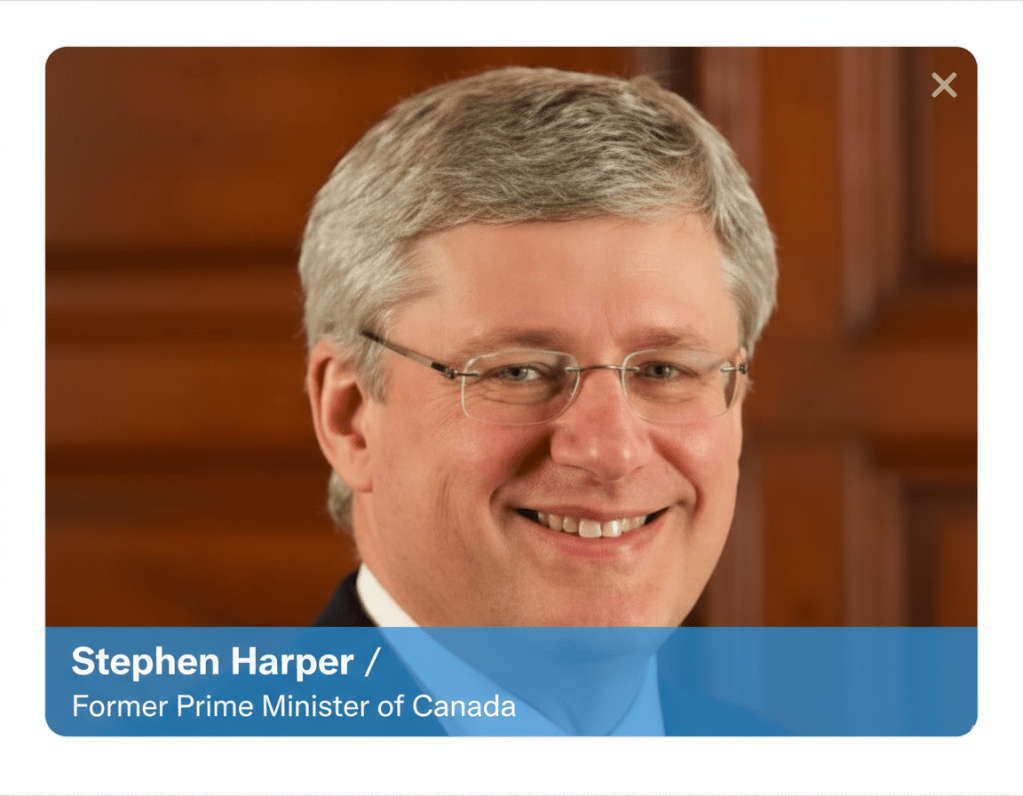
Earlier this month, it was announced that former Prime Minister Stephen Harper will finally have his portrait unveiled in Parliament. For Canadian political leaders, this tradition often serves as the capstone of a public career. It is a formal and long-standing recognition of service to the country.
The unveiling will naturally prompt renewed reflection on Harper’s full record in office. Commentators, political figures, and Canadians alike will revisit his years in power. They will weigh his decisions, priorities, and long-term impact on the country.
The ceremony takes place in February. It coincides with the 20th anniversary of the Conservative Party’s first minority government. This coincidence adds historical weight to the moment. It marks an opportunity to step back from daily politics and assess a defining chapter in modern Canadian history.
Under Harper, Canada experienced a decade marked by stability, economic resilience, and clear governing priorities. While opinions will vary, his time in office left a lasting imprint on the country.
Here are a few of the key accomplishments that continue to shape his legacy.
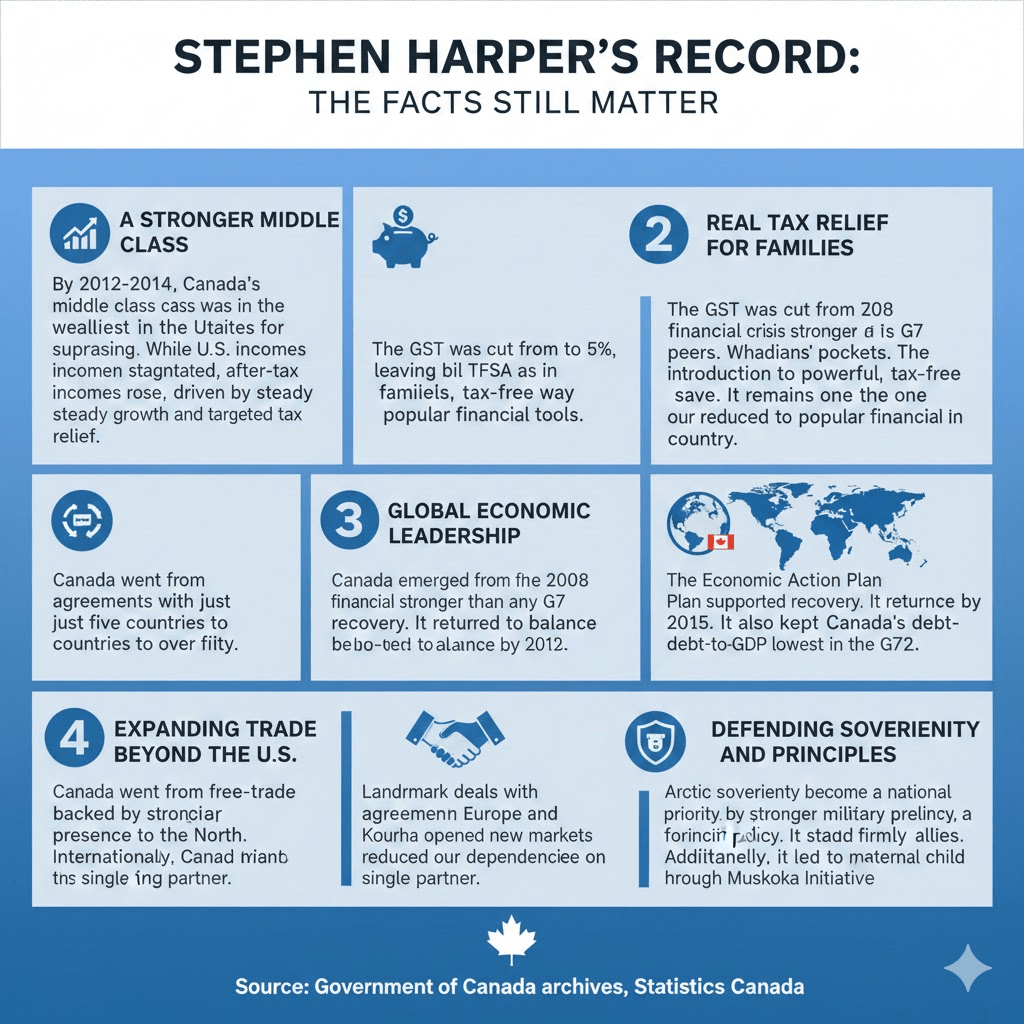
Stephen Harper’s Record: The Facts Still Matter
- A Stronger Middle Class
By 2012–2014, Canada’s middle class was the wealthiest in the world, surpassing the United States for the first time. While U.S. incomes stagnated, Canadian after-tax incomes rose, driven by steady growth and targeted tax relief.
2 Real Tax Relief for Families
The GST was cut from 7% to 5%, leaving billions in Canadians’ pockets. The introduction of the TFSA gave families a powerful, tax-free way to save. It remains one of the most popular financial tools in the country.
3 Global Economic Leadership
Canada emerged from the 2008 financial crisis stronger than any of its G7 peers. The Economic Action Plan supported recovery. It returned the budget to balance by 2015. It also kept Canada’s debt-to-GDP ratio the lowest in the G7.
4 Expanding Trade Beyond the U.S.
Canada went from free-trade agreements with just five countries to over fifty. Landmark deals with Europe and South Korea opened new markets and reduced our dependence on a single trading partner.
5 Defending Sovereignty and Principles, Arctic sovereignty became a national priority, backed by a stronger military presence in the North. Internationally, Canada pursued a principled foreign policy. It stood firmly with democratic allies. Additionally, it led to maternal and child health through the Muskoka Initiative.
In fact, former Prime Minister Stephen Harper has grown more popular since leaving office in 2015. A recent poll conducted by Research Co. ranked Harper second among Canada’s prime ministers since 1968.
As we consider the Harper government, we see its clear record of accomplishment. This record stands as the true legacy of former Prime Minister Stephen Harper. It improved the lives of Canadians and served as a principled moral voice on the world stage.
That legacy includes a full decade of strong, stable Conservative government for Canada.